
What Is an IT Strategy?
An IT strategy is a practical plan for using technology to support the business. It may cover software, cloud services, websites, cybersecurity, data, automation, internal processes, and the systems employees use every day.
A good IT strategy does not need to be a long technical document. It simply needs to answer a few important questions: What does the business want to achieve? Which systems support those goals? Where do delays, risks, or unnecessary costs exist? Which improvements should come first? How will the company measure success?
This approach keeps technology connected to the real needs of the organization.
1. It Connects Technology to Business Goals
The biggest benefit of an IT strategy is alignment. Technology should support the direction of the business, not operate in a separate corner.
For example, a company that wants to generate more qualified leads may need a faster website, better analytics, a customer relationship management system, and automated follow-up. A company that wants to reduce operating costs may need workflow automation, connected software, or more accurate reporting. The right technology depends on the goal.
Without a clear plan, businesses often buy software because it looks impressive or because competitors use it. They may end up with overlapping subscriptions, underused features, and systems that do not work well together. An IT strategy helps leaders ask a more useful question: “What business result will this investment create?”
2. It Improves Daily Efficiency
A strong IT strategy shows where employees lose time. Repetitive data entry, manual reports, disconnected platforms, and unclear approval processes can quietly reduce productivity every day.
The right system can remove much of that friction. For example, a business can connect its website forms to its CRM. When someone submits an inquiry, the system can record the information, notify the right employee, send a confirmation, and begin the follow-up process automatically.
The goal is not to automate every task. The goal is to improve the tasks that create the most delay, cost, or frustration. A thoughtful strategy looks at how work actually happens and then chooses technology that makes that work simpler.
3. It Prepares the Business for Growth
Technology that works for a small business may not work when the company adds more customers, employees, locations, or services. Spreadsheets and disconnected email accounts may seem manageable at first, but they can become difficult to control as the business grows.
An IT strategy helps a company prepare before its systems become a bottleneck. It encourages leaders to consider whether the website can handle more traffic, whether the sales team can manage more leads, and whether employees can access accurate information when they need it.
Scalability does not mean buying the most expensive platform. It means choosing flexible systems, or investing in custom software development that can support future growth without forcing the company into a costly rebuild. The best solution today should also leave room for tomorrow.
4. It Strengthens Cybersecurity
Cybersecurity should form part of the business plan, not something the company considers only after an incident. A strong IT strategy helps the organization understand what data it holds, who can access it, what threats it faces, and how it will respond if something goes wrong.
A practical security plan usually includes:
Multi-factor authentication, strong access controls, software updates, and employee training
Secure backups, recovery testing, vendor reviews, monitoring, and an incident-response plan
No strategy removes every risk. However, preparation can reduce preventable problems and help the business respond faster when an incident occurs. It can also protect customer trust, company data, and business continuity.
5. It Creates a Better Customer Experience
Customers judge a business through its digital experience. A slow website, broken contact form, confusing checkout, or unreliable booking system can cost a company opportunities even when its products and services are excellent.
An IT strategy helps the business review the entire customer journey, from the first online search to the purchase and follow-up. It can reveal where customers wait too long, repeat information, abandon forms, or struggle to find help.
Improving the experience may involve better website performance, mobile-friendly design, connected booking and payment tools, faster communication, or more useful customer records. These changes can make the business easier to trust and easier to buy from.
A smoother digital experience also supports marketing. When campaigns bring visitors to a website, the business needs reliable systems to turn that attention into inquiries, appointments, sales, or repeat customers.
6. It Helps Leaders Make Better Decisions
Good decisions depend on good information. An IT strategy gives a business a clearer plan for collecting, connecting, protecting, and using data.
Without that plan, information often sits in separate systems. Marketing may track one number, sales may use another, and leadership may receive reports that do not match. This makes it difficult to understand what is working or where the company should invest next.
A connected technology environment can help leaders track useful measures such as lead quality, conversion rate, customer acquisition cost, sales cycle length, retention, website performance, and campaign return on investment. The purpose is not to fill dashboards with numbers. The purpose is to help people act on reliable information.
Data becomes valuable when the business trusts it, understands it, and uses it to make a decision.
7. It Makes Digital Transformation More Practical
Digital transformation is more than adding new software. It means changing the way a company works, serves customers, or creates value. An IT strategy gives that change a clear purpose and prevents the business from chasing every new trend.
For example, a company may decide to modernize an outdated platform, improve its cloud systems, introduce artificial intelligence into a specific workflow, or connect marketing and sales data. Each option may offer value, but the business should evaluate it carefully.
Before starting a project, leaders should consider the problem it solves, the outcome it supports, the risks it introduces, the people who will use it, and the resources required. This practical approach makes digital transformation more manageable and more likely to produce results.
8. It Helps Control Technology Costs
Technology costs can grow quietly. A business may collect software subscriptions over several years, pay for inactive user accounts, or maintain several platforms that perform similar tasks.
An IT strategy creates an opportunity to review those costs. Through proactive IT management, the company can identify unused tools, remove duplicate services, improve cloud resource management, and renegotiate agreements where appropriate. It can also decide where spending will create the greatest value.
Cost control does not always mean choosing the cheapest product. A low-cost tool may create security problems, require more manual work, or limit future growth. The better question is whether the complete investment supports the business and delivers a reasonable return over time.
9. It Clarifies Priorities and Accountability
Most businesses have more technology ideas than time or budget. An IT strategy helps leaders decide what to do now, what to plan for later, and what to leave behind.
Each important project should have a clear purpose, an owner, a timeline, a budget, and a definition of success. The team should also understand the risks and dependencies before work begins.
This structure keeps projects from remaining permanently “in progress.” It gives internal leaders, executives, and outside partners such as IT staff augmentation teams, a shared understanding of the work. It also makes it easier to review progress and adjust the plan when circumstances change.
How to Build an Effective IT Strategy
Start by reviewing the current technology environment. List the systems, vendors, data, costs, security controls, and recurring problems. Speak with the people who use those systems every day because they often see issues that leadership cannot see from a report.
Next, define the business outcomes that technology must support. These might include increasing qualified leads, improving customer retention, reducing administrative work, protecting sensitive information, or expanding into a new market.
Then compare the current state with the capabilities the business needs. Prioritize projects according to business value, urgency, risk, complexity, and available resources. Create a practical roadmap with owners, deadlines, budgets, and success measures.
A simple planning process includes:
Assess the current environment. Identify systems, costs, risks, data, and pain points.
Set clear objectives. Decide what the business wants technology to improve.
Prioritize the gaps. Start with projects that create strong value or reduce serious risk.
Implement in stages. Test changes, train employees, and measure the results.
Review the strategy regularly. Update it as the company, market, and technology change.
How Often Should a Business Review Its IT Strategy?
A business should review its IT strategy at least once a year and revisit it whenever a major change occurs. A new location, merger, product launch, security incident, leadership change, or rapid growth can all affect technology needs.
The strategy should remain flexible. It should guide decisions without preventing the business from responding to new opportunities. Regular reviews help leaders remove outdated priorities and focus resources on the work that matters most now.
Final Thoughts
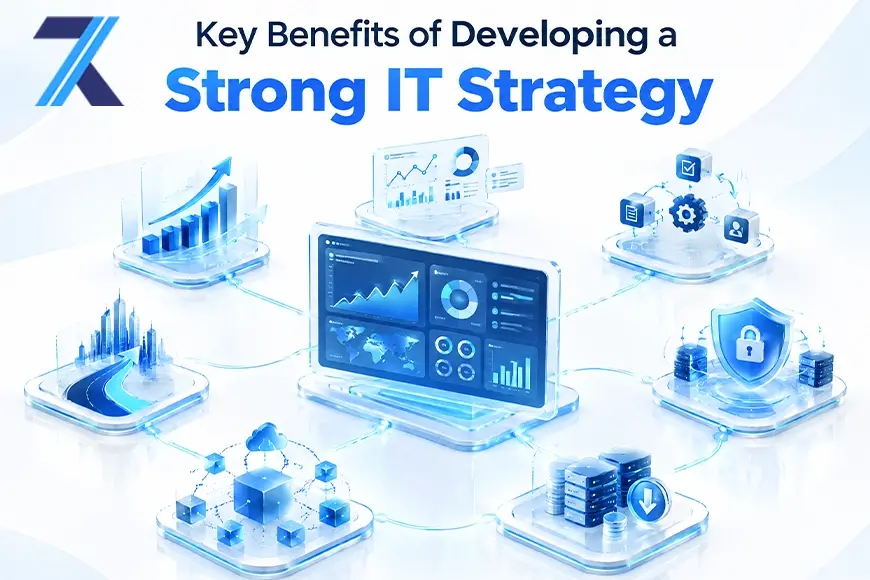
A strong IT strategy helps a business get more value from technology. It improves efficiency, supports growth, strengthens security, enhances the customer experience, and gives leaders better information for decision-making.
The best strategy does not focus on technology alone. It connects people, processes, systems, data, and measurable business outcomes. When companies treat IT planning as an ongoing business priority, they can make smarter investments and build a stronger foundation for the future.
If you want to make better use of technology and create a more effective digital growth plan, contact 7 Kings Code today to discuss your next step.